
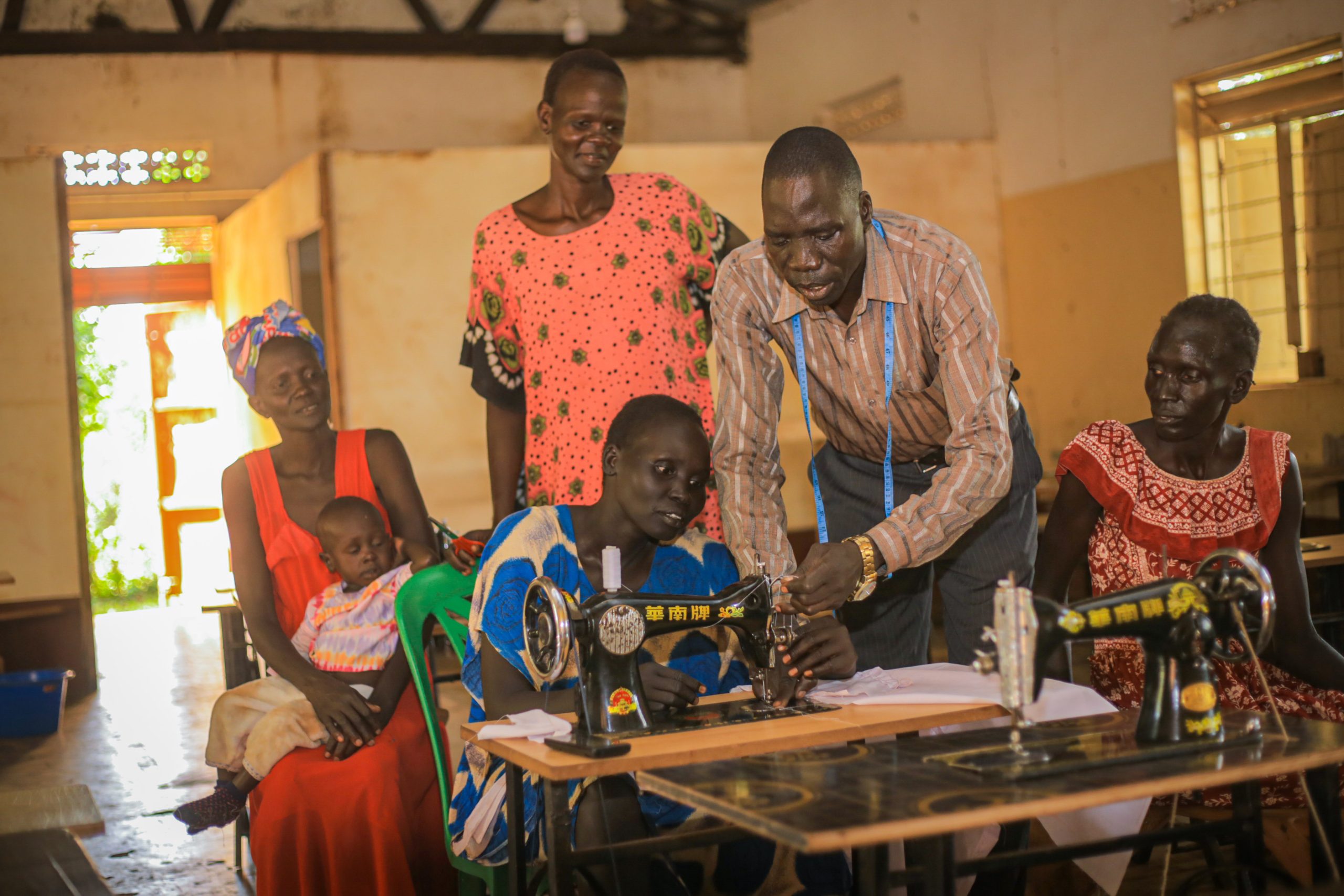
This is a business turnaround story, not a charity story. The metric is profit. The hero is Lucy Khan Namale and Ssabaganzi Kevin. The emotion is pride, not pity.
In Term 1 of 2025, Mummy Foundation ran a deficit of UGX 65,500. By Term 2, it had generated a profit of UGX 6.4 million. Not because a donor arrived. Because the management changed.
School fee income rose 12%. Operating costs fell 17%. Forty-five caregivers had joined VSLAs and started businesses giving them the financial stability to pay fees consistently. The Centre Management Committee was reviewing its own budget monthly and making its own decisions. PHB had built the system. The centre was running it.

``PHB taught us to look at our centre like a business. Not a charity. A business that exists for children. That shift in thinking changed everything about how we make decisions.``
Ssabaganzi Kevin, Founder & Project Manager, Mummy Foundation, Kampala
Mummy Foundation now serves approximately 250 children across nursery and lower primary levels, in a refugee and host community neighbourhood that was losing schools to strikes, regulatory closures, and rising costs.
The contrast is the story: a loan, not a grant. With conditions, not charity. 7 latrines infrastructure that is humble, essential, and honest.
In February 2025, Bright International ECD Centre received a loan of UGX 5 million. Not a grant. A loan with a 16 month repayment schedule, a signed MoU, and quarterly reporting requirements. The purpose: construct 7 pit latrines. A basic standard. A compliance requirement. A dignity decision.
At the same time, four VSLA members used individual loans of UGX 150,000–500,000 to start and scale businesses. All four now pay their children’s school fees.
``We were not given a handout. We were given a loan with conditions. That matters. It means PHB trusts us to run this like a business. And that trust changes how we behave.``
Natuhwera Abel, Director, Bright International ECD Centre, Nakivale

Mid-western Uganda. Mixed refugee and host community. PHB’s most advanced graduation framework implementation.
Focus in 2026: agriculture value chain integration in poultry and permaculture, host-refugee economic cohesion, and the investment-readiness template for national scale. A strategic review with TRIAS is underway to develop viable value chains that create sustainable income and reinforce food and nutrition security.
In 2025, UNHCR warned that humanitarian assistance for Uganda’s 1.9 million refugees would fall to USD 5 per person per month against a required USD 16.
ECD enrolment among refugees fell from 47% to 34% in two years. The pupil-teacher ratio is projected to exceed 211:1 in 2026, against a national standard of 53:1. 84% of refugee ECD centres are outside Uganda’s national Education Management Information System.
In this context, graduation-driven ECD is not a development aspiration. It is the only model that works. A centre that can generate its own income, govern its own affairs, and access investment does not collapse when USD 5 becomes USD 3.
PHB exceeded every programme target in 2025 — despite this environment, not in spite of it. The model is designed for exactly this kind of pressure.